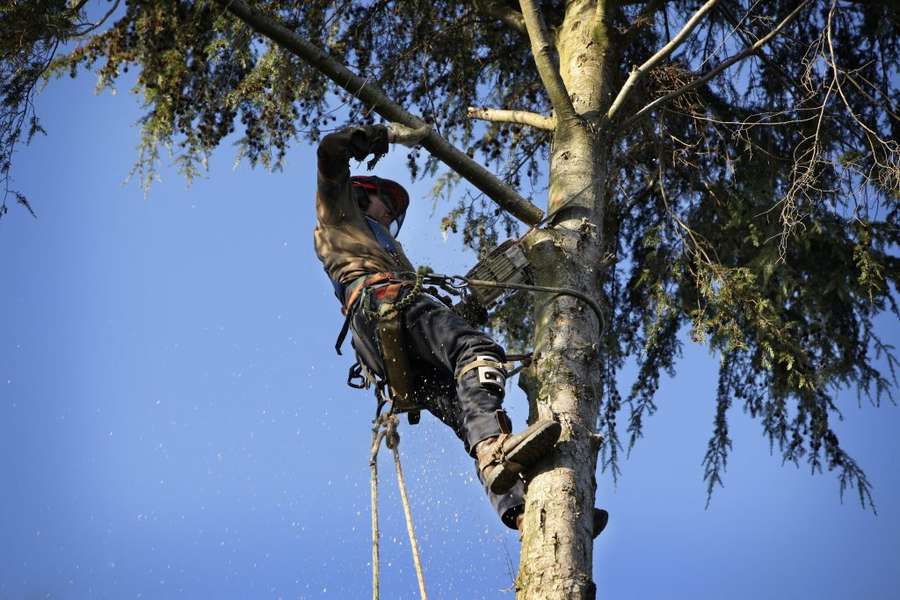
Tree Trimming & Pruning in the Treasure Valley
Structural pruning, crown work, and fruit tree care that keeps Treasure Valley trees healthy, safe, and beautiful for decades.
Pruning that keeps trees healthy for decades
Good pruning is invisible a year later. The tree looks like itself, only healthier: dead limbs gone, weight balanced, light reaching the interior, clearance over the roof and driveway. Bad pruning is visible forever: stubs, decay columns, and the weak, fast-growing shoots that follow a topping cut. Boise Tree Pros prunes for the tree’s long-term structure, not for a quick cosmetic fix.
Most of the pruning we do in the Treasure Valley falls into two buckets. Young trees need structural pruning that sets up a strong scaffold for the next forty years. Mature trees need crown work: removing dead, damaged, and crossing limbs, lifting low branches for clearance, and reducing weight on overextended limbs. Both are planned cuts with a reason behind each one, and we explain the plan before we climb.
Timing matters as much as technique. Pruning at the wrong time of year can invite disease, stress the tree, or ruin a season of fruit or flowers. Idaho’s high-desert climate adds its own wrinkles: intense sun, dry summers, and freeze-thaw cycles that punish fresh wounds made at the wrong moment. The sections below cover timing by species for the trees we see most.
Structural pruning: the highest-value work in tree care
A young tree is a rough draft. Left alone, many species develop co-dominant leaders, branches with narrow angles and included bark, and limbs spaced so tightly they will rub and compete for decades. These are the defects that cause mature trees to split in windstorms. Structural pruning in the first ten to fifteen years corrects them while the cuts are small and the tree heals fast.
The work itself is methodical. We select a single central leader, choose well-spaced scaffold branches with wide angles of attachment, and subordinate or remove competing leaders and poorly attached limbs. The goal is a trunk that can carry the mature crown without the built-in failure points that storms exploit. A tree pruned this way needs less corrective work for its entire life, which makes early structural pruning the cheapest tree care you will ever buy.
This is especially valuable in newer Treasure Valley subdivisions, where builders plant fast-growing species that shoot up quickly and develop poor structure just as fast. A short structural pruning visit every couple of years while the tree is young prevents the expensive corrective job, or the removal, that follows a split trunk at age twenty.
Crown work for mature trees: cleaning, thinning, raising, reducing
Mature trees need a different approach. The structure is set; the job is maintenance. Crown cleaning removes dead, dying, diseased, and broken branches, which is both a safety measure and a health measure, since deadwood harbors decay fungi and pests. For the big shade trees common in Boise’s older neighborhoods, maples, elms, sycamores, and lindens, regular cleaning keeps the canopy safe over streets, sidewalks, and roofs.
Crown thinning selectively removes live branches to let light and air through the canopy. Done properly it reduces wind resistance, which matters in a valley that gets serious wind events, and it lets turf and plantings thrive under the tree. Thinning is not shearing: we remove whole branches back to their point of origin rather than shortening everything, so the tree keeps its natural form.
Crown raising removes lower limbs for clearance over driveways, sidewalks, roofs, and sight lines. Crown reduction shortens the overall canopy when a tree has outgrown its space, using proper reduction cuts back to lateral branches. What we never do is top a tree. Topping, cutting limbs back to stubs, triggers a flush of weakly attached shoots, opens the door to decay, and ruins the tree’s form. Any company that offers to top your tree is telling you everything about their standards.
Fruit trees: pruning for harvest, not just looks
The Treasure Valley grows excellent fruit: apples, pears, cherries, peaches, and plums all thrive here. But an unpruned fruit tree puts its energy into wood, not fruit. Annual dormant pruning keeps the canopy open so sunlight reaches the fruiting wood, which improves both yield and flavor, and it keeps the tree at a height you can actually harvest and spray.
Most fruit trees in our area do best with an open-center or modified-leader form. We remove crossing and inward-growing branches, thin crowded spurs, and head back overly vigorous shoots. For stone fruits like peaches and cherries, we are careful about timing and about bacterial canker and fire blight, both of which move on pruning tools. We disinfect between trees when disease is a concern, and we advise against heavy pruning on a tree already stressed by disease.
If you inherited an overgrown, neglected fruit tree, do not try to fix it in one season. Reclaiming an old apple tree is a two- or three-year project: remove the dead and diseased wood first, then open the canopy gradually, never taking more than about a quarter of the live crown in a year. Patience here is the difference between a revived producer and a shocked tree that never recovers.
When to prune: timing by species in the Treasure Valley
The general rule is simple: prune deciduous trees during dormancy, from late fall through late winter, when the structure is visible, disease pressure is low, and the tree’s energy is stored in the roots. In the Treasure Valley that window typically runs from November into March, avoiding the coldest snaps. Most of our pruning work happens in this window, and it is the right time for maples, oaks, ash, lindens, elms, and most ornamentals.
There are important exceptions. Spring-flowering trees and shrubs, crabapples, cherries grown for bloom, lilacs, should be pruned right after flowering, since they set buds on last year’s wood. Pruning them in winter removes the spring show. Oaks deserve a note: prune oaks in the coldest part of winter to minimize oak wilt risk, and never prune oaks in spring when the beetles that spread the disease are active. Elms are similar: dormant-season pruning limits the bark beetles that carry Dutch elm disease.
Evergreens follow their own calendar. Pines are pruned in late winter or very early spring before the new candles extend; once the candles harden off, the window closes. Spruces and firs tolerate light shaping in late winter. Junipers and arborvitae can be touched up in early spring, but never cut back into old wood with no green growth, because most conifers will not regrow from bare interior wood.
Two more timing rules. Avoid heavy pruning in early fall: cuts made then stimulate tender growth that the first hard freeze kills, and the tree is busy storing energy, not healing. And fruit trees get their structural work in late winter dormancy, with light summer thinning only to remove water sprouts. When in doubt, our best-time-to-trim guide for the Treasure Valley covers the calendar in detail.
Areas We Serve
Tree service across Boise and the Treasure Valley. Click a city for local details.
Tree Trimming FAQs
Straight answers about this service in the Treasure Valley.
Will trimming hurt my tree?
Proper pruning helps a tree: it removes deadwood, improves structure, and reduces failure risk. We never remove more than about a quarter of the live canopy in a season, we make clean cuts at the branch collar, and we refuse to top trees.
What is tree topping, and why will you not do it?
Topping cuts limbs back to stubs. It triggers a flush of weakly attached shoots, opens large wounds to decay, and ruins the tree’s form. A topped tree is more dangerous, not less. We use proper reduction cuts instead.
When is the best time to trim trees in Boise?
For most deciduous trees, the dormant season from November through March. Spring-flowering ornamentals are pruned after bloom, and pines in late winter before candle growth. Our timing guide covers the full calendar.
How often should a mature tree be pruned?
Most mature shade trees benefit from crown cleaning every three to five years. Young trees should get structural attention every two to three years while their form is being established.
Can you trim branches that hang over my neighbor’s yard?
Yes, with coordination. We handle the climbing and cutting; you handle the conversation with the neighbor first. For trunks on the property line, both owners should agree on the plan.
Do you haul away the branches?
Yes. Chipping and hauling are included in every pruning quote, and the work area is raked before we leave.
Ready for healthier, better-shaped trees?
Call now for the fastest response, or request a free quote and we will walk your property with you.