Tree Removal in the Treasure Valley
Planned, safe removal of dead, declining, or hazardous trees across Boise and the Treasure Valley, with full cleanup included.
Safe, planned tree removal across the Treasure Valley
Some trees reach the end of their safe, useful life. A cottonwood hollowed by years of wind, a silver maple planted too close to a foundation in the 1970s, an elm that has been declining for three seasons, or a pine shattered by a Treasure Valley windstorm: each one is a removal candidate. Boise Tree Pros handles planned tree removal across Boise and the surrounding valley, from single backyard trees to multi-tree clearings on acreage.
Removal is always a last resort in our book. When you call about a tree you are worried about, the first thing we do is assess whether it can be saved with pruning, cabling, or weight reduction. Plenty of trees that look alarming are structurally sound once the deadwood is out. But when the trunk is compromised, the root system is failing, or the tree has simply outgrown a safe location, removal is the responsible choice. We would rather talk you out of an unnecessary removal than sell you one.
Every removal starts with a free on-site assessment. We look at the species, size, lean, structural defects, and everything the tree could hit: house, garage, fences, sheds, power lines, septic systems, and neighboring property. Then we give you a written plan and a fixed quote that spells out the method, the equipment, and exactly what cleanup is included. No surprises on the day of the job.
Hazard trees: what we look for during an assessment
A hazard tree is not just a dead tree. Plenty of live trees are hazardous, and plenty of ugly trees are perfectly safe. What matters is the combination of a structural defect and a target. A leaning pine in an empty pasture is a curiosity. The same pine leaning toward a bedroom is an emergency. During an assessment we evaluate both halves of that equation.
On the tree itself, we look for the classic warning signs. A crown that is thinning from the top down, large dead limbs, or bark peeling away in sheets all point to decline. Fungal fruiting bodies, conks or mushrooms growing from the trunk or root flare, mean internal decay is advanced, because fungi digest wood from the inside out. Cavities, cracks running vertically along the trunk, and co-dominant stems with included bark are structural red flags. Around the base, heaving soil, exposed or severed roots, and mushrooms in a ring around the trunk suggest root failure, which is the most dangerous defect of all because a tree with failed roots can go over in a normal wind.
Then we look at the target zone. What sits within striking distance if the tree or a major limb fails? Homes and garages are the obvious ones, but we also consider driveways where cars park, patios and play areas, fences, outbuildings, power and service lines, and neighboring yards. A defect that would be a watch item in an open field becomes a removal recommendation when it hangs over a roof. We explain this plainly during the walkthrough so you understand the reasoning, not just the verdict.
Crane work and technical removals in tight spaces
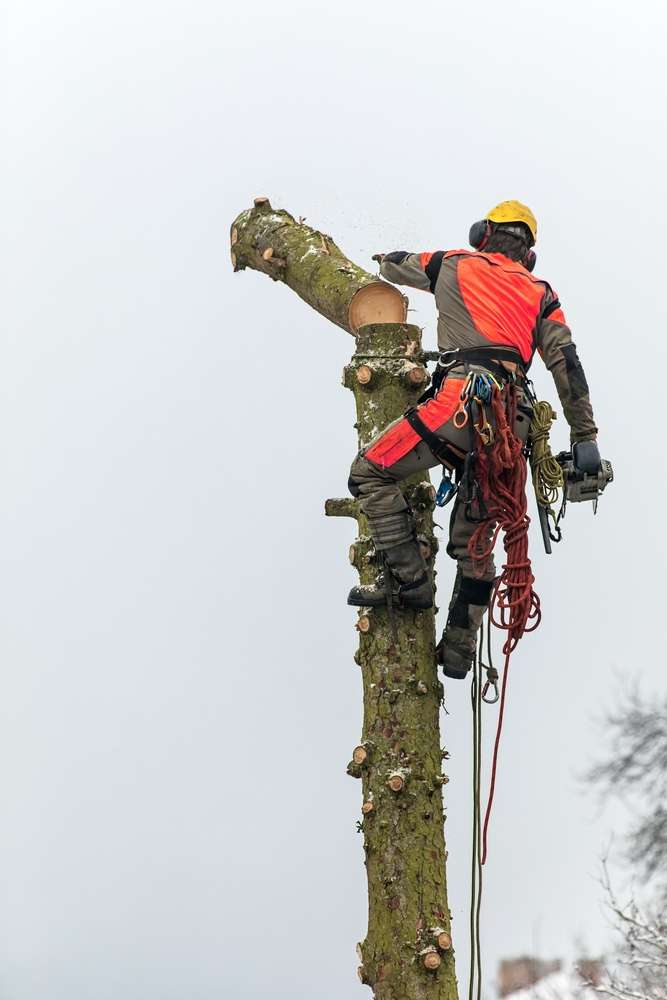
Many Treasure Valley removals are straightforward: fell the tree in one piece into an open landing zone. But Boise lots are often tight, with the tree wedged between a house, a fence, and a neighbor’s garage. That is where technical removal comes in. Our climbers dismantle the tree section by section, rigging each piece with ropes so it can be lowered clear of everything below. Nothing free-falls onto your roof.
For the biggest trees, or trees that cannot be climbed safely because of decay, we bring in a crane. A crane-assisted removal lets us lift large sections vertically off the stump and swing them to a landing zone, sometimes over a house entirely. It sounds dramatic, and it is efficient: a tree that would take a climbing crew two days can come down in hours with a crane. Crane work costs more than a standard removal, but for large trees over structures it is frequently the safest option and sometimes the only practical one.
Access drives the plan as much as the tree does. We note gate widths, overhead wires, septic fields, irrigation lines, and soft ground that will not support heavy equipment. Bucket trucks need firm, level access, and cranes need room to set outriggers and swing. When we quote the job, the equipment is part of the quote, so the price you approve is the price for the method the site actually requires.
Permits, utilities, and good neighbor relations
On private residential property in most Treasure Valley cities, you do not need a permit to remove a tree you own. The exceptions matter: street trees in the public right-of-way, trees in designated protected areas, and trees covered by HOA covenants often require approval first. If your tree sits in a parking strip or near the sidewalk, check with the city before scheduling work. We are happy to tell you what we see on the property line during the estimate, but the permit itself is the owner’s responsibility.
Utilities are the other hidden complication. Trees love to grow into power lines, and only the utility or its qualified contractors may trim within a set distance of energized lines. If your tree touches or nearly touches primary lines, we coordinate with the utility rather than improvising. We also call 811 to locate underground utilities before any stump work, because grinding into a gas or fiber line is a catastrophe that a free phone call prevents.
Finally, trees do not respect fences. If limbs overhang a neighbor’s yard, or the trunk sits on the property line, talk to the neighbor before the crew arrives. We have seen removals delayed by a dispute that a ten-minute conversation would have prevented. Shared trees usually mean shared decisions, and we will work with whatever arrangement you and your neighbor agree on.
Cleanup: what the yard looks like when we leave
A removal quote from us always specifies cleanup, because cleanup is half the job. Standard cleanup includes cutting the trunk and limbs, chipping the brush, hauling the debris, and raking the work area. Lawns get protection mats under heavy equipment where practical. If you heat with wood, we can cut the trunk into firewood lengths and stack it on site instead of hauling it, which many customers prefer.
The stump is a separate decision. Grinding it below grade lets you reclaim the spot for lawn or garden, and we can add stump grinding to any removal quote. If you skip the grind, we cut the stump low and you can decide later.
After the crew leaves, expect a raked work area and a yard that looks like a tree was professionally removed rather than fought with. If turf took a beating from equipment, we tell you during the quote what to expect and how to repair it. Sod is cheap; surprises are expensive.
Areas We Serve
Tree service across Boise and the Treasure Valley. Click a city for local details.
Tree Removal FAQs
Straight answers about this service in the Treasure Valley.
How much does tree removal cost in Boise?
Most residential removals fall in a wide range depending on size, location, access, and whether crane work is needed. Our Boise cost guide breaks down what drives the price. The only way to get an exact number is a free on-site assessment.
Do I need a permit to remove a tree on my property?
On private residential property in most Treasure Valley cities, no permit is needed. Street trees in the public right-of-way, trees in protected areas, and trees under HOA covenants often require approval first. When in doubt, check with the city before scheduling work.
Can you remove a tree that is close to my house?
Yes. Tight-access trees are dismantled section by section, with each piece rigged and lowered clear of the roof, fences, and landscaping. For very large trees over structures, we use crane-assisted removal.
Will the crew damage my lawn or driveway?
We plan access to protect your property: ground mats under heavy equipment, planned travel paths, and rigging instead of drops where it matters. Some turf wear is possible on large jobs, and we tell you what to expect during the quote and how to repair it.
What happens to the wood and branches?
Brush is chipped and hauled as part of standard cleanup. Trunk wood can be cut into firewood lengths and stacked on site if you heat with wood. Stump grinding can be added to any removal quote.
Ready to deal with that problem tree?
Call now for the fastest response, or request a free quote and we will walk your property with you.