Stump Grinding & Removal in the Treasure Valley
Stumps ground below grade so your yard is safe, mowable, and ready for whatever comes next.
Reclaim the spot where the tree stood
The tree is down, the crew has left, and there it sits: a stump, right in the middle of the lawn project. Stumps are more than an eyesore. They are mower hazards, tripping hazards, and magnets for ants, beetles, and fungal decay. Some species sucker aggressively from the stump and roots, sending up a thicket of shoots that is harder to deal with than the original tree. Grinding the stump below grade solves all of it in one visit.
Boise Tree Pros grinds stumps across Boise and the Treasure Valley with tracked and wheeled grinders sized for the job, from small ornamental stumps to the massive cottonwood stumps left from acreage clearing. We grind below grade, handle the chips the way you prefer, and leave the area ready for whatever comes next: lawn, garden bed, patio, or a new tree.
Stump grinding is often booked together with a tree removal, and it costs less that way since the crew and equipment are already on site. But we also grind stumps left by other companies, stumps from trees that came down years ago, and stumps you inherited with the property. If you can find it, we can grind it.
How stump grinding works
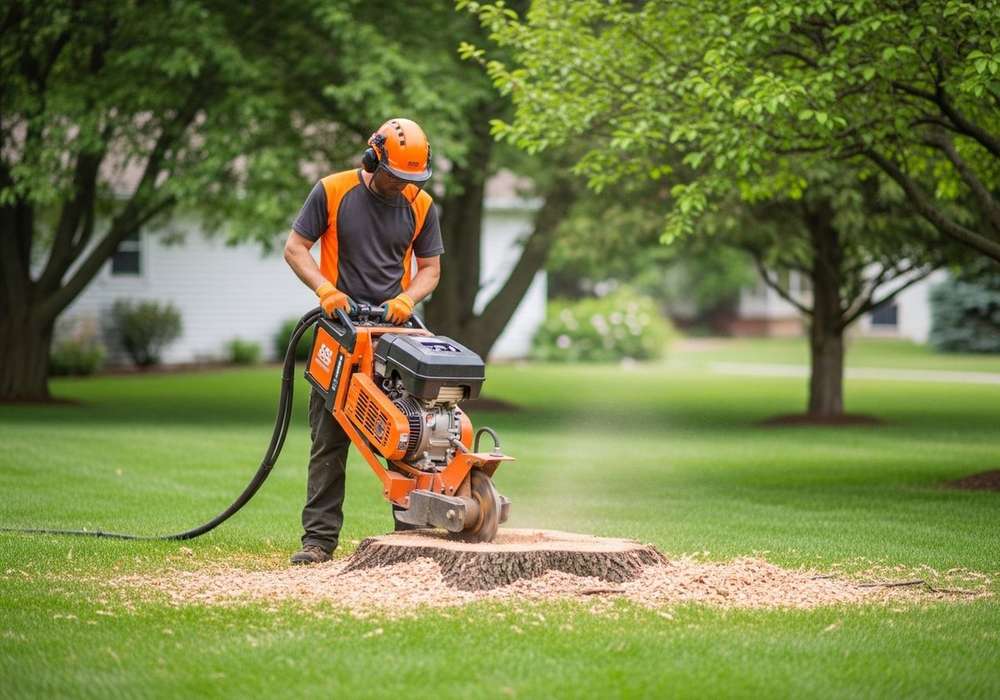
A stump grinder is a machine with a spinning cutter wheel studded with carbide teeth. The operator sweeps the wheel across the stump, shaving it down layer by layer, then works outward to chase the major lateral roots. We grind in passes, going deeper with each pass, until the stump and the flare roots sit well below the surrounding grade.
Access determines which machine we bring. A compact grinder fits through a standard 36-inch gate and handles most residential stumps. Larger stumps, or stumps far from access, call for a bigger tracked machine. During the estimate we check gate widths, slopes, irrigation lines, and how close the stump sits to foundations, fences, and septic components, then match the machine to the site.
What you get is a pile of wood chips and a shallow depression where the stump was. The chips are the ground-up stump and roots, mixed with some soil. Most customers have us rake the chips level into the depression, where they settle over a few weeks, or we haul them away. Either way, the stump itself is gone the same day.
Grinding depth: how deep is deep enough?
The most common question we hear is how deep we grind, and the honest answer is that it depends on what the spot becomes. For a lawn, grinding 6 to 8 inches below grade is plenty: sod or seed goes over the top and no one will ever know a tree stood there. This is the standard residential grind, and it handles the vast majority of stumps.
If you plan to replant in the same area, go deeper. We recommend 12 inches or more below grade for replanting, because fresh grindings and old roots occupy the soil where the new tree’s roots need to establish. Deeper grinding also lets us chase more of the lateral roots, which reduces suckering from species like cottonwood, aspen, and elm that love to send up shoots from leftover roots.
True stump removal, digging the entire root ball out with an excavator, is a different service with a different price. It leaves a crater that needs backfilling and is usually only justified for construction, where a foundation or driveway will sit exactly where the stump is. For everything else, grinding is faster, cheaper, and less destructive to the surrounding yard.
Replanting where a stump was ground
Yes, you can plant where a stump was ground, with a little patience. Fresh wood chips tie up nitrogen as they decompose, which can starve a new planting. The simplest fix is time: let the area settle for a season while the chips break down. If you cannot wait, we can haul the chips away and backfill with topsoil, which gives the new tree a clean start.
Consider planting the new tree offset from the exact old spot rather than directly on top of it. The old root zone is full of decaying wood that settles unevenly, and the soil biology is still catching up. Planting three to five feet to the side puts the new tree in undisturbed soil while keeping it in the same general location. Choose a species suited to the site this time: the right tree in the right place is the whole lesson of the stump you just removed.
For lawn instead of a tree, the process is simpler. We rake the grindings level, let them settle, top-dress with soil, and you seed or sod over the top. Within a season the spot blends into the surrounding turf. If mushrooms pop up from the buried roots the first year, that is normal decomposition, not a problem: knock them over and they fade as the wood finishes breaking down.
Surface roots, trip hazards, and roots near structures
Not every grinding job starts with a stump. Surface roots from maples, elms, and cottonwoods heave sidewalks, crack driveways, and turn lawns into obstacle courses. We can grind exposed roots down to grade, which is often the practical fix when removing the tree is not on the table. This is cosmetic and functional work: the root stays alive underground, but the trip hazard is gone.
A word of caution for trees you want to keep: roots are the tree’s lifeline, and grinding or cutting too many of them, or cutting too close to the trunk, can destabilize or kill the tree. We follow a conservative rule on living trees, working only on the problem roots and keeping cuts well out from the trunk. If the root conflict is severe enough that the fix would endanger the tree, we tell you so, and the conversation becomes about the tree’s future, not just the sidewalk.
Roots near foundations, sewer lines, and septic systems deserve an assessment before any cutting. A root pressing on a foundation wall is a different problem from a root lifting a paver, and the right fix depends on the species, the distance, and the structure. We look at the whole picture during the estimate and recommend the least destructive option that actually solves the problem.
Areas We Serve
Tree service across Boise and the Treasure Valley. Click a city for local details.
Stump Grinding FAQs
Straight answers about this service in the Treasure Valley.
Will the stump grow back after grinding?
No. Grinding destroys the stump’s living tissue below grade, so the stump itself cannot regrow. Some species, like cottonwood, aspen, and elm, can send up shoots from leftover lateral roots; grinding deeper and chasing those roots minimizes it.
How deep do you grind stumps?
Six to eight inches below grade is standard for lawn areas. For replanting, we recommend 12 inches or more so the new tree’s roots have clear soil to establish in.
Can you get a grinder into my fenced backyard?
Usually yes. Our compact grinder fits through a standard 36-inch gate. We check gate widths, slopes, and access during the free estimate and bring the right machine for your yard.
What happens to all the wood chips?
Your choice. We can rake them level into the depression to settle, haul them away, or leave them for you to use as mulch. Most customers have us level them and top-dress with soil for lawn.
Can I plant a new tree in the same spot?
Yes, with a little patience. Fresh chips tie up nitrogen while they decompose, so waiting a season or hauling the chips and backfilling with topsoil gives the new tree the best start. Planting a few feet offset from the old spot is usually the smartest move.
Ready to reclaim that spot in your yard?
Call now for the fastest response, or request a free quote and we will look at your stump with you.